
Transform your kitchen for a fraction of the cost with professional spray painting techniques
High-gloss kitchen doors can look stunning when they're new, but over time they can become dated, scratched, or simply no longer match your style. The question many homeowners ask is whether they can spray paint gloss kitchen doors to give them a fresh new look. The answer is yes, and it's become one of the most popular kitchen renovation methods in recent years.
Spray painting gloss kitchen doors typically costs around 70% less than replacing them, making it a cost-effective way to refresh your kitchen without a full renovation. With over 40% of modern kitchen refurbishments in the UK now including glossy or reflective finishes, this technique has proven its worth for both domestic and commercial properties.
Gloss kitchen doors are designed to reflect light and create a sleek, modern appearance. These surfaces can be made from various materials including MDF, wood, or laminate with a high gloss finish applied. The reflective nature of gloss cabinets makes them popular choices, but it also presents unique challenges when painting. Homeowners often ask, can you spray paint gloss kitchen cupboards, and the answer is yes—with the right preparation and professional technique, stunning results can be achieved.
The surface of gloss kitchen doors is typically very smooth and non-porous, which can make it difficult for new paint to adhere properly. This is why proper preparation and technique are essential when you want to spray paint these surfaces.
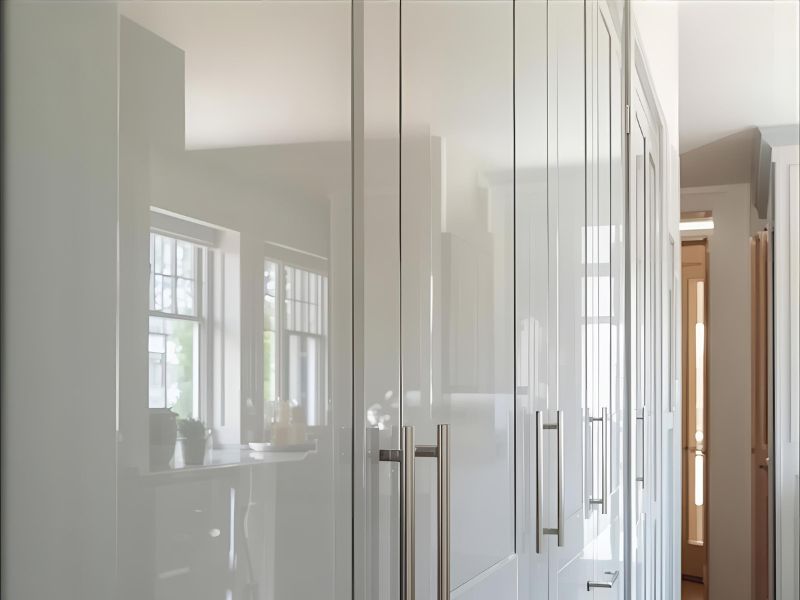
Spray paint can be applied to gloss kitchen cabinets, but success depends heavily on proper preparation and technique. Many homeowners wonder, can kitchen door lacquer be resprayed, and the answer is yes—with the right preparation, products, and professional technique, a flawless finish can be achieved. The key is understanding that you're working with a high gloss surface that naturally resists paint adhesion.
Professional spraying can give doors a flawless, factory-finish look that brushes and rollers often can't achieve, avoiding streaks, roller marks or uneven sheen. Most gloss kitchen door spraying projects can be completed in just 2-3 days, compared to several weeks for a full replacement kitchen.
When considering whether to spray your gloss kitchen doors, you should evaluate the current condition of the surfaces, your skill level, and whether you have access to the right equipment and environment.
The first step in painting gloss cabinets is thorough cleaning. Use sugar soap to remove all grease, dirt, and residue from the cabinet doors. This cleaning agent is specifically designed to cut through kitchen grime and prepare surfaces for painting.
After cleaning with sugar soap, rinse all surfaces with warm water and allow them to dry completely. Any remaining moisture will prevent proper paint adhesion.
Sanding is crucial when working with high gloss kitchen doors. Use medium grit sandpaper (around 220 grit) to create a rougher texture that will help the new paint adhere properly. You don't need to remove all the existing finish, just create enough texture for the primer to grip.
Focus on sanding the entire surface evenly, paying particular attention to areas that receive daily wear such as around door handles. Always sand in a consistent pattern to avoid creating visible scratches in the final finish.
For the best finish, remove doors from their hinges and take off all door handles and hardware. This allows you to spray each surface thoroughly without obstruction and ensures paint doesn't build up around hinges or handles.
Set up a clean, well ventilated area where you can spray the doors horizontally. This prevents runs and drips that can occur when spraying vertical surfaces.
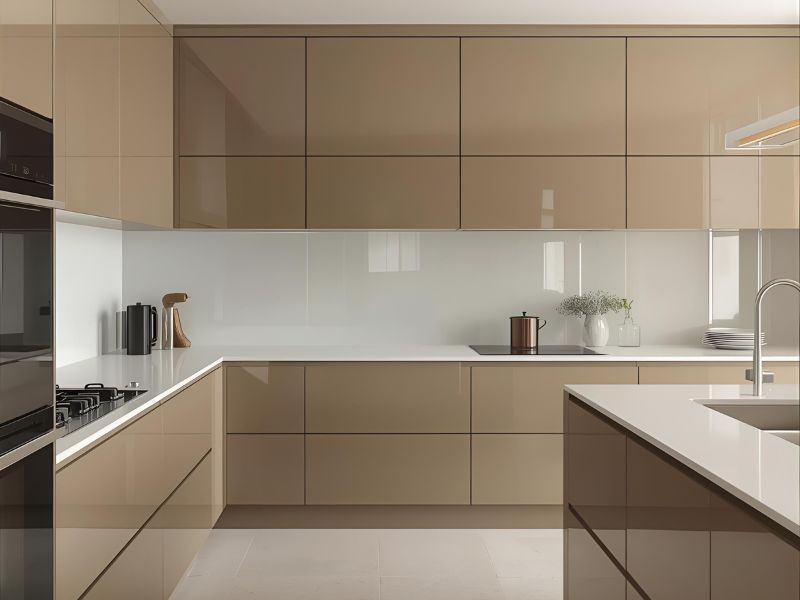
When selecting paint gloss kitchen doors, choose a high-quality paint specifically designed for kitchen environments. The paint must be able to withstand daily wear, moisture, and cleaning. Look for paints that offer durability and are suitable for high-use areas.
You can choose between different finishes including matt finish, satin, or maintaining the high gloss look. A gloss spray finish reflects more light, which can make smaller kitchens look brighter and more spacious.
Professional spray equipment will give you the best results, but there are options for DIY enthusiasts. You can use a spray gun, aerosol cans, or even a paintbrush or foam roller for smaller areas, though spray application typically provides superior results.
When using spray paint, ensure you have adequate ventilation and wear rubber gloves throughout the process. The entire surface should be covered evenly to avoid patchy coverage.
Apply a high-quality primer designed to adhere properly to glossy surfaces. The primer creates a base that helps the topcoat bond effectively. Allow the primer to dry completely before proceeding to the paint application.
Use thin coats rather than trying to cover everything in one heavy application. This approach reduces the risk of runs and ensures better adhesion.
Apply the first coat of paint in light, even passes. Start painting from one edge and work systematically across the entire surface. Maintain consistent speed and distance from the surface to ensure uniform coverage.
Allow the first coat to dry completely before assessing coverage. Depending on the paint and conditions, this could take several hours.
Most surfaces will require a second coat for complete coverage and optimal durability. Some colours or finishes may need a third coat. When done properly, sprayed gloss finishes can last 7-10 years, provided they're cared for and not subjected to heavy abrasion.
Apply each coat in the same systematic manner, ensuring the previous layer is completely dry before adding the next.
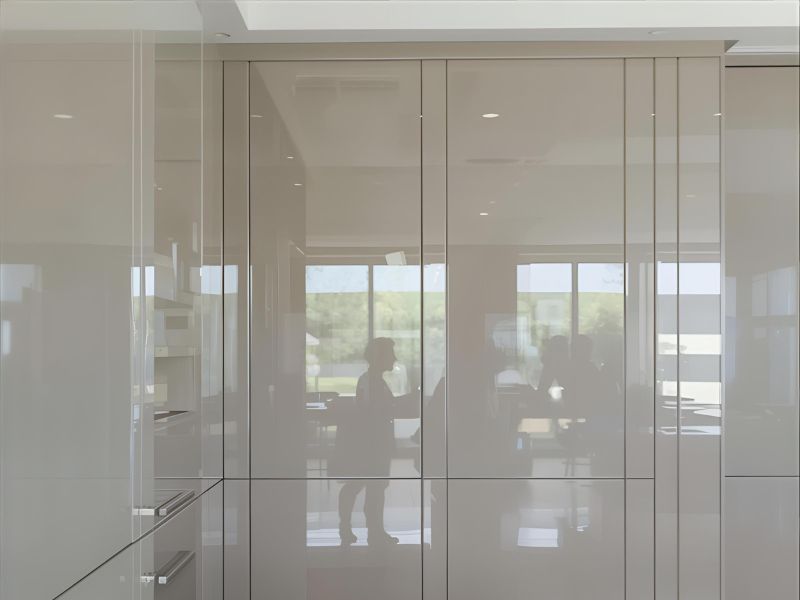
For a successful gloss kitchen respraying project, you'll need several key items:
A dust sheet to protect surrounding areas and floors from overspray. Sugar soap for initial cleaning, along with a kitchen scourer for stubborn areas. Medium grit sandpaper for creating surface texture.
High-quality primer and paint suitable for kitchen use. A mini roller or foam roller can be useful for touch-ups, though spray application is preferred for the main surfaces.
Wear rubber gloves throughout the process and ensure you have a well ventilated area for working. A dry paint brush can be helpful for smoothing any imperfections between coats.
Taking on kitchen cabinet spraying as a diy project can save money, but it requires significant preparation and skill. You need the right equipment, proper workspace, and patience to achieve professional-looking results.
The learning curve can be steep, and mistakes can be costly to correct. Consider starting with less visible cupboard doors to practice your technique before tackling the main kitchen doors.
Professional kitchen resprayers have the experience, equipment, and workspace to deliver consistently excellent results. They understand how different paints behave and can achieve the perfect colour match and finish quality. For many homeowners wondering who can spray paint my kitchen units, the answer lies in choosing experienced professionals who can guarantee a flawless and durable finish.
Around 60% of homeowners admit they would keep their existing kitchen layout if they could just change the look of their doors, and professional spraying offers exactly that solution.
Compared to a complete kitchen replacement, spray painting offers substantial savings while dramatically updating your kitchen's appearance. This worthwhile investment can transform your fitted kitchens without the disruption of a full renovation. Many homeowners begin by asking, how much does a kitchen respray cost, and are often pleasantly surprised at the affordability compared to replacement.
More than 50% of people upgrading their kitchens say the doors are the first thing visitors notice. Respraying them gives a fresh new impression without the cost of brand-new units.
Sprayed gloss doors are more eco-friendly than replacements, as they reduce the amount of bulky MDF, wood, or laminate sent to landfill. Damaged or faded gloss doors can often be resprayed and restored instead of replaced, saving money while maintaining a like-new appearance.
Spray coatings are available in an almost unlimited range of colours and finishes, meaning homeowners can go beyond white gloss and choose bold, matte, satin, or metallic looks too. This flexibility allows you to create the perfect colour scheme for your kitchen environment.
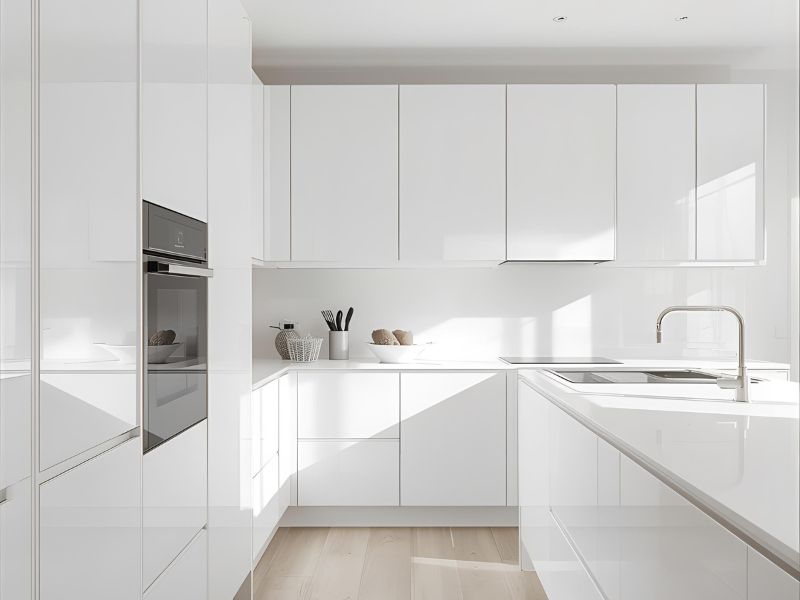
One of the biggest challenges when spraying gloss surfaces is achieving uniform coverage without runs or thin spots. The key is maintaining consistent technique and using thin coats rather than trying to cover everything heavily in one pass.
Practice your spray pattern on a test piece before starting on your actual kitchen doors. This helps you understand how the paint flows and how to maintain consistent coverage.
If your current doors have chips, scratches, or other damage, these need to be addressed before spraying. Small imperfections can be filled and sanded smooth, while more serious damage might require more extensive preparation.
The surface correctly prepared will always produce better results than rushing through the preparation stages.
A properly sprayed gloss finish should provide years of service, but this depends on correct preparation and application. Homeowners often ask, how long does a kitchen respray last, and the truth is that with the right paint for the kitchen environment and careful application, results can endure for many years. Using the right paint for the kitchen environment and ensuring each layer has dried completely before applying the next are crucial for longevity.
Once your newly sprayed doors are complete, proper care will extend their lifespan significantly. Clean surfaces regularly with a damp cloth and mild detergent, avoiding abrasive cleaners that could damage the finish.
Be gentle around the edge nearest to hinges and handles, as these areas receive the most wear. Address any small chips or scratches promptly to prevent moisture penetration that could cause larger problems.
Regular maintenance and careful use will help your newly sprayed kitchen doors maintain their appearance for many years, making this a longer lasting finish compared to many alternatives.
Spray painting gloss kitchen doors is an excellent way to update your kitchen without the expense and disruption of complete replacement. Whether you tackle it as a DIY project or hire professionals, the key to success lies in thorough preparation and using quality materials.
The transformation possible through kitchen door respraying has made it one of the most popular renovation choices for both domestic and commercial properties. With proper technique and care, you can achieve a professional finish that will serve your kitchen well for years to come.
Ready to give your kitchen a stunning makeover? Contact We Do Kitchen Resprays, a trusted kitchen respray company, today for your free quote and discover how we can transform your kitchen doors with our professional spray painting service. Our experienced team delivers exceptional results that will exceed your expectations and breathe new life into your kitchen space.
